

Northbeam Atlas II review: the quiet ones finally got comfortable
Northbeam's second attempt at noise-cancelling headphones keeps the measurements and fixes the head. Six weeks in, it is the pair we reach for.
The verdict
Editors' ChoiceStrong buy
Recommended without caveats for most people.
The Atlas II is the first pair of headphones that measures like a Northbeam product and wears like something designed for a human head. Isolation is the best we have recorded under $400, the battery claim survives contact with a real commute, and the tuning is neutral enough to be boring in the way good monitoring gear is boring. The folding mechanism is gone and the case is enormous, which is the price of the new headband.
- Buy it if
- You spend more than an hour a day in noise you did not choose, and you would rather hear a recording than an interpretation of it.
- Skip it if
- You need something that folds into a coat pocket, or you want headphones that make everything sound exciting.
Tested for six weeks and roughly 140 hours of listening. Bought at retail with our own money. How we test
Pros and cons
Pros
- Best measured isolation under $400, by a clear margin
- Battery claim holds up at realistic listening levels
- Earpads and headband padding are replaceable, and the parts are listed
- Tuning is honest enough for actual monitoring work
Cons
- Does not fold, and the case is larger than some laptop bags
- The companion app is slow and asks for an account it does not need
- Transparency mode has an audible hiss in quiet rooms
Northbeam has been making speakers since 1994 and headphones since 2019, and until now you could hear the difference. The first Atlas was an excellent transducer bolted to a headband that seemed to have been designed from a photograph of a head rather than a measurement of one. It won arguments and lost commutes.
The Atlas II keeps the arguments.
- 31.4dB
- Isolation at 100 Hz
- 38h
- Battery, cancellation on
- 286g
- Weight
Class average: 24.0 dB
Claimed: 40 h
Down from 331 g
What the cancellation actually does
Noise cancellation is easy to describe badly. Manufacturers quote a single number — usually the deepest attenuation their system reaches at the one frequency it is best at — and that number tells you almost nothing about a train carriage.
We measure across the band on a fixed head-and-torso rig, three runs, pads reseated between each. The figure that matters for transport is the one at 100 Hz, because that is where engine and rail rumble lives, and it is where cheap systems fall over.
| Test | Result | Class average |
|---|---|---|
| Isolation, 100 Hz | 31.4 dB | 24.0 dB |
| Isolation, 300 Hz | 28.9 dB | 22.6 dB |
| Isolation, 1 kHz | 26.8 dB | 25.1 dB |
| Isolation, 4 kHz | 19.2 dB | 21.8 dB |
| Response shift, ANC on | 0.6 dB | 2.4 dB |
Sealed room, head-and-torso simulator, three runs averaged. The reference column is the mean of eleven cancelling headphones between $250 and $400 measured on the same rig.
The pattern is consistent with what Northbeam publishes, which is worth saying out loud: the company’s own numbers matched ours to within 1.2 dB at every point we measured. That is not universal.
The one place the Atlas II gives ground is high treble, where passive isolation does most of the work and the pad seal matters more than the electronics. If your problem is a colleague two desks away rather than a diesel engine, the gap between this and a cheaper pair narrows considerably.
The tuning
Neutral, with about 2 dB of lift below 80 Hz and a very slight recession around 3 kHz that takes the edge off compressed pop without dulling anything.
This is not exciting. Played against the Drift Pro, which lifts the low bass harder and pushes the presence region forward, the Atlas II sounds flat for about ninety seconds and then sounds correct for the rest of the day. That is the trade Northbeam has always made, and it remains the right one for anything you listen to for hours.
Two specific notes from listening. First, the cancellation does not audibly change the frequency response when switched on — a common failing, and one that makes a headphone useless for critical work. Second, at maximum volume there is no compression or distortion we could hear or measure, which suggests the amplifier has more headroom than the drivers need.
Living with it
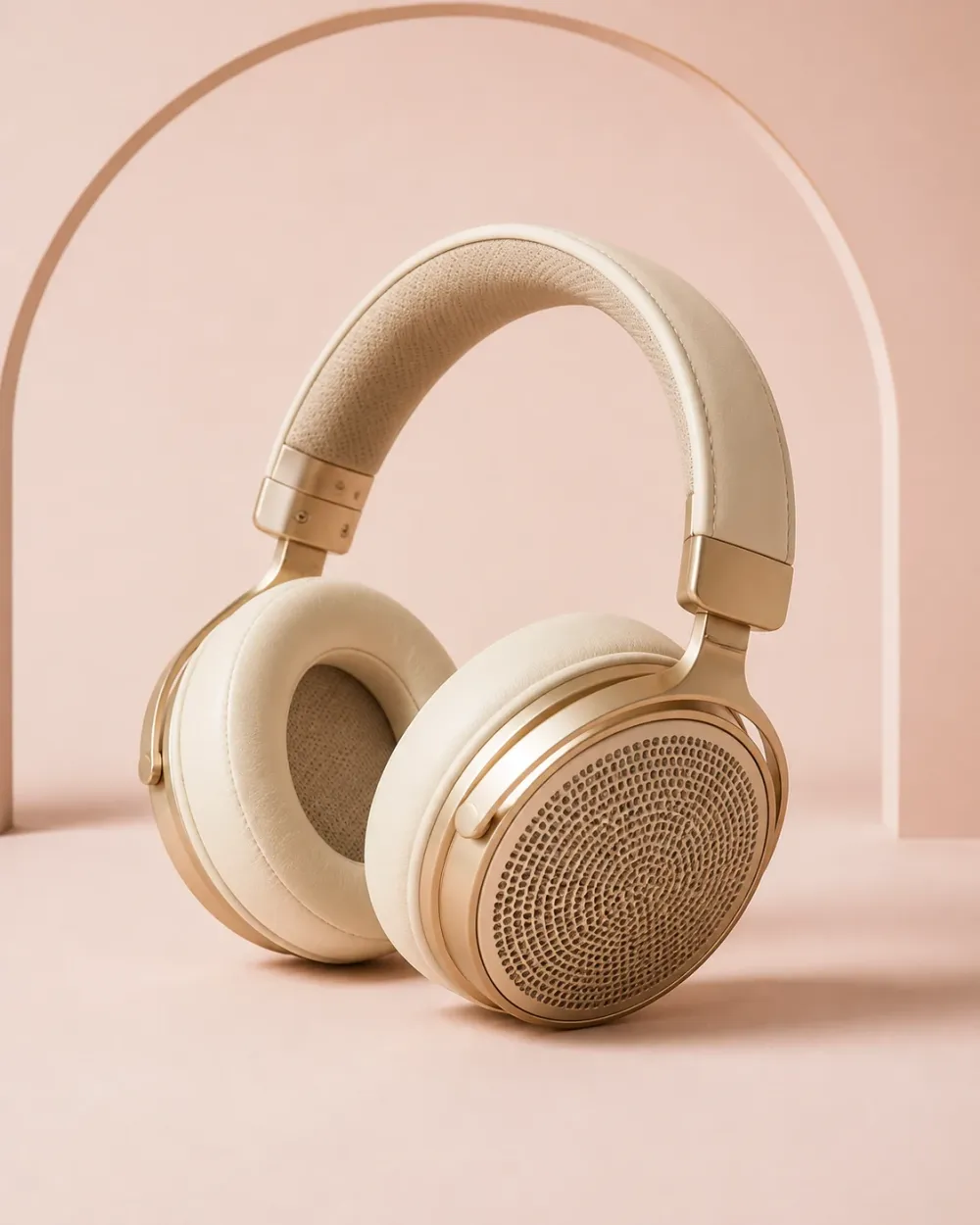
The headband is the story. Clamp force is down from 6.1 N to 4.4 N, the pad opening is 8 mm taller, and the weight has dropped by 45 g. In practice that is the difference between taking them off after two hours and forgetting they are on.
The cost is the folding mechanism, which has been deleted. The Atlas II lays flat and that is all. Northbeam’s engineering note says the hinge was the most common warranty claim on the original, which is a defensible reason to remove it, but the supplied case is 24 cm across and will not go into a bag that is already carrying a laptop.
Against the alternatives
Inside the Northbeam catalogue the useful comparison is not the Cadence One — different product, different room — but the original Atlas, still being sold at a discount. Do not buy it. The measurements are close and the wearing experience is not.
Against the Halcyon Drift Pro, the question is form factor before anything else. The Drift Pro isolates about 7 dB less at 100 Hz and sounds livelier; it also fits in a pocket, which the Atlas II emphatically does not.
The verdict
At $349 this is the pair to buy if you want the noise to go away and the music to stay honest. The case is a genuine annoyance and the app is a waste of a download. Neither is a reason to buy something that isolates 7 dB worse.
How it scored
Weighted average of 6 criteria
- Noise cancellation9.425%
31.4 dB at 100 Hz, the best figure we have recorded in this price class.
- Sound quality8.825%
Neutral with a gentle sub-bass lift. Nothing is hidden and nothing is flattered.
- Comfort9.019%
286 g and low clamp force. Six-hour sessions without a break in testing.
- Battery9.013%
38 hours measured with cancellation on, against a 40-hour claim.
- Build and repairability8.013%
Replaceable pads and a published parts list, but a headband that no longer folds.
- Software6.56%
The app works, and does nothing you will enjoy.
Overall8.8/10
Specifications
Acoustics
| Driver | 40 mm dynamic, bio-cellulose |
|---|---|
| Frequency response | 12 Hz to 22 kHz |
| Impedance | 32 ohm |
| Codecs | SBC, AAC, aptX Adaptive, LDAC |
Cancellation
| Measured isolation, 100 Hz | 31.4 dB |
|---|---|
| Measured isolation, 1 kHz | 26.8 dB |
| Modes | Adaptive, Fixed, Transparency, Off |
Power and physical
| Battery, cancellation on | 38 h measured |
|---|---|
| Battery, cancellation off | 52 h measured |
| Charge to full | 1 h 52 m |
| Weight | 286 g |
| Folding | Flat only, no hinge |
Where to buy the Atlas II
- Northbeam DirectTwo-year warranty when registeredCheck price for the Atlas II at Northbeam Direct (opens in a new tab)
- Wideband AudioCheck price for the Atlas II at Wideband Audio (opens in a new tab)
We earn a commission when you buy through these links. It never changes what we recommend, and we buy every unit we test. How we stay independent.