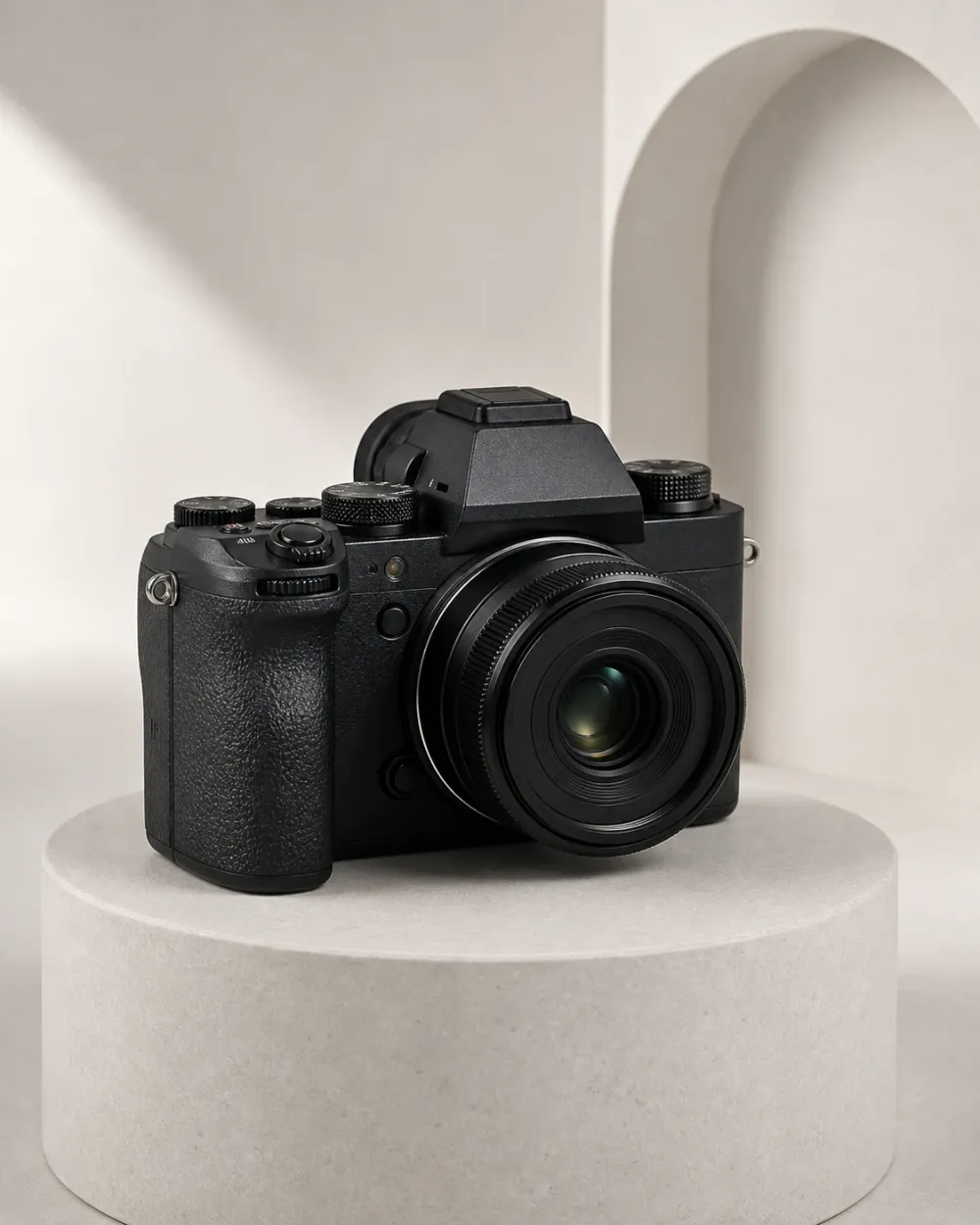



The short version
- Sensors improve in small increments. Optics barely change for a decade.
- Buy into the mount with the glass you want, then buy the cheapest body on it.
- One fast prime will change your photographs more than two generations of sensor.
Camera marketing is organised around bodies, because bodies are what get replaced. The decision that actually determines what your photographs look like in ten years is which mount you buy into, and that decision is about glass.
The asymmetry
A sensor generation is about three years and buys you a stop of high-ISO performance and better autofocus. Real, but incremental.
A good lens design stays in the catalogue for a decade or more and does not get meaningfully better, because the physics has not moved. The 35mm prime we recommend today is optically the same lens it was in 2023.
What this means when you buy
Work out which lenses you want before you decide which body to buy. Look at the whole catalogue for a mount, including the used market — that is where a mount’s twenty-year history pays out.
Then buy the least expensive body that has the autofocus you need. Put the difference into glass.
The one exception
If your photographs are failing for a reason that is a body problem — you cannot track moving subjects, or you need more than about six stops of dynamic range in one frame — then it is a body problem, and a lens will not fix it. That is narrow, and it is not most people.