
Brioso Grind X review: grind quality you can taste, retention you cannot ignore
A 64 mm flat-burr grinder at $299 that produces genuinely narrow particle distribution, and holds on to 1.4 g of every dose.
The verdict
Best ValueGood, with caveats
Worth buying if the compromises below suit you.
The burr set in the Grind X is better than anything else at $299 and the particle distribution proves it — 8.2% fines against a class average of 12.4%. The problem sits in the chute. At 1.4 g of retention, roughly 8% of an espresso dose stays in the machine and comes out in the next one, which matters enormously if you change beans and not at all if you do not. For a household drinking one roast at a time, this is the best grinder at the price. For anyone tasting through coffees, it is a daily irritation.
- Buy it if
- You drink one roast at a time, make several drinks in a row, and want espresso-grade consistency for under $300.
- Skip it if
- You change beans often, or you make one shot a day and want it to taste like the beans you just put in.
Tested for nine weeks and roughly 400 doses. Bought at retail with our own money. How we test
Pros and cons
Pros
- Particle distribution that matches grinders at twice the price
- Stepless collar with genuinely usable resolution in the espresso range
- Full parts diagram published, burrs replaceable at home
- Consistent dose weight, within 0.3 g across ten pulls
Cons
- 1.4 g of retention makes single-dosing frustrating
- No bellows or blind tumbler included to help clear it
- The hopper lid rattles at speed
- Static is severe with light roasts in dry air
The grinder matters more than the machine. This is the least popular true statement in home espresso, because grinders are expensive and boring and a machine looks like something.
- 8.2%
- Fines below 100 micron
- 1.4g
- Retention per dose
- 11s
- To grind 18 g
Class average: 12.4%
Particle distribution
We sieve a 50 g sample through a five-stage stack and weigh each fraction. Fines — the material below 100 micron — are what cause channelling and bitterness; a narrow distribution with few fines is the entire reason to spend money on a grinder.
| Test | Result | Class average |
|---|---|---|
| Fines below 100 micron | 8.2% | 12.4% |
| Peak particle size | 340 micron | 355 micron |
| Mass within 100 micron of peak | 71% | 58% |
| Dose consistency, 10 pulls | 0.3 g | 0.6 g |
| Retention per dose | 1.4 g | 0.9 g |
50 g of medium roast at espresso setting, five-stage sieve stack, three samples averaged. Reference is the mean of four 58-64 mm grinders between $250 and $400.
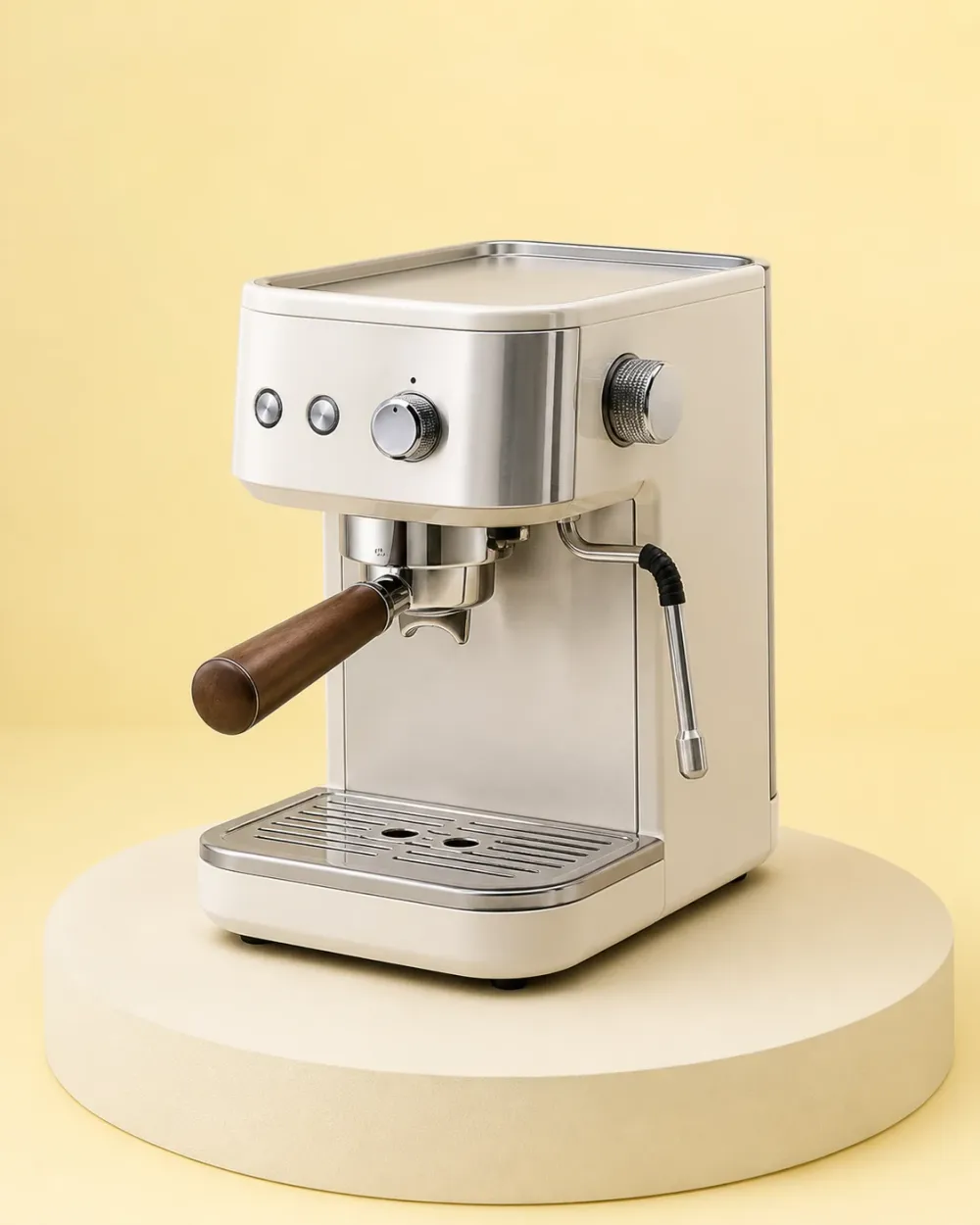
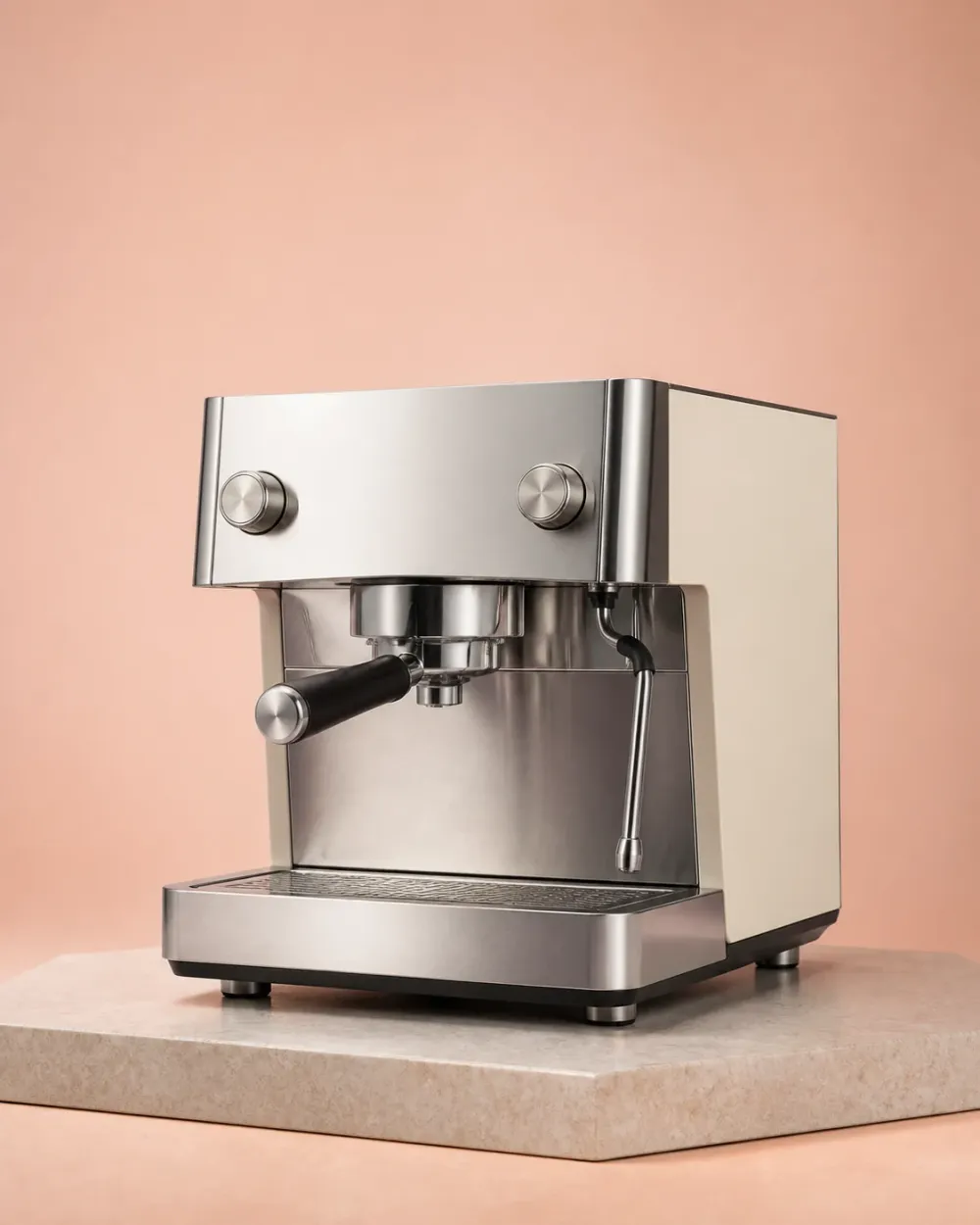
Seventy-one per cent of the mass falling within 100 micron of the peak is a very good result, and it is audible in the cup: extractions are more even, and the range of grind settings that produce a drinkable shot is noticeably wider. On a Piccolo E1 the pairing is excellent.
Retention, and who it hurts
One point four grams stays in the chute after every dose. That coffee is not lost — it comes out at the start of the next grind — but it means the first 1.4 g of your morning espresso is yesterday’s coffee.
If you drink one roast, week in and week out, this is invisible. If you buy 250 g bags of different coffees and taste through them, it is a constant, small contamination, and the only fix is to purge a few grams every time you change.
Brioso does not ship a bellows or a blind tumbler, either of which would help. A third-party bellows costs about $15 and drops retention to roughly 0.6 g in our testing, which is the first thing we would buy alongside it.
Everything else
Eleven seconds for an 18 g dose at 72 dBA — fast and loud, roughly in line with the class. The stepless collar has about 90 degrees of usable range across espresso, which is enough resolution to dial in without hunting.
Static is the one build complaint beyond retention: with light roasts in a dry kitchen, grounds cling to everything. A drop of water on the beans before grinding solves it entirely and is what we did for the last six weeks.
The verdict
At $299 the burr performance is unmatched, and the retention is the price of it. Budget another $15 for a bellows and this becomes very hard to argue with.
How it scored
Weighted average of 6 criteria
- Grind consistency9.128%
8.2% fines by mass, against a 12.4% class average.
- Adjustment8.617%
Stepless, with about 90 degrees of usable espresso range.
- Retention4.822%
1.4 g held in the chute. Single-dosing means purging every time.
- Speed and noise8.011%
11 seconds for 18 g, at 72 dBA.
- Build8.811%
Metal where it matters, and a published parts diagram.
- Value9.011%
This burr set does not otherwise exist at this money.
Overall7.9/10
Specifications
Grinding
| Burrs | 64 mm flat steel |
|---|---|
| Adjustment | Stepless collar |
| Grind time, 18 g | 11 seconds |
Measured output
| Fines below 100 micron | 8.2% by mass |
|---|---|
| Peak particle size | 340 micron at espresso setting |
| Retention | 1.4 g |
Physical
| Hopper | 250 g, removable |
|---|---|
| Weight | 6.1 kg |
| Noise | 72 dBA at 50 cm |
Where to buy the Grind X
- Brioso DirectCheck price for the Grind X at Brioso Direct (opens in a new tab)
- Crema WorksCheck price for the Grind X at Crema Works (opens in a new tab)
We earn a commission when you buy through these links. It never changes what we recommend, and we buy every unit we test. How we stay independent.