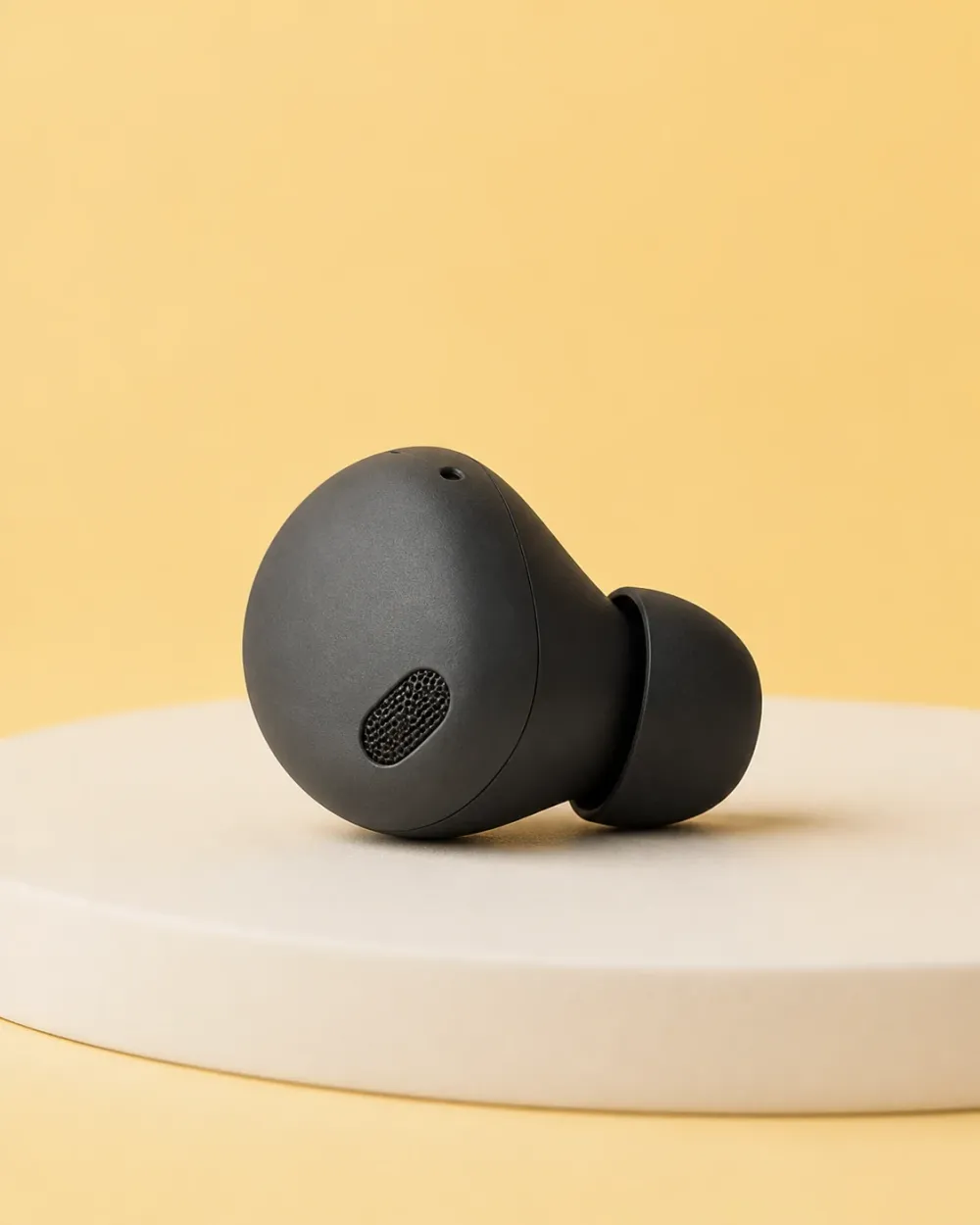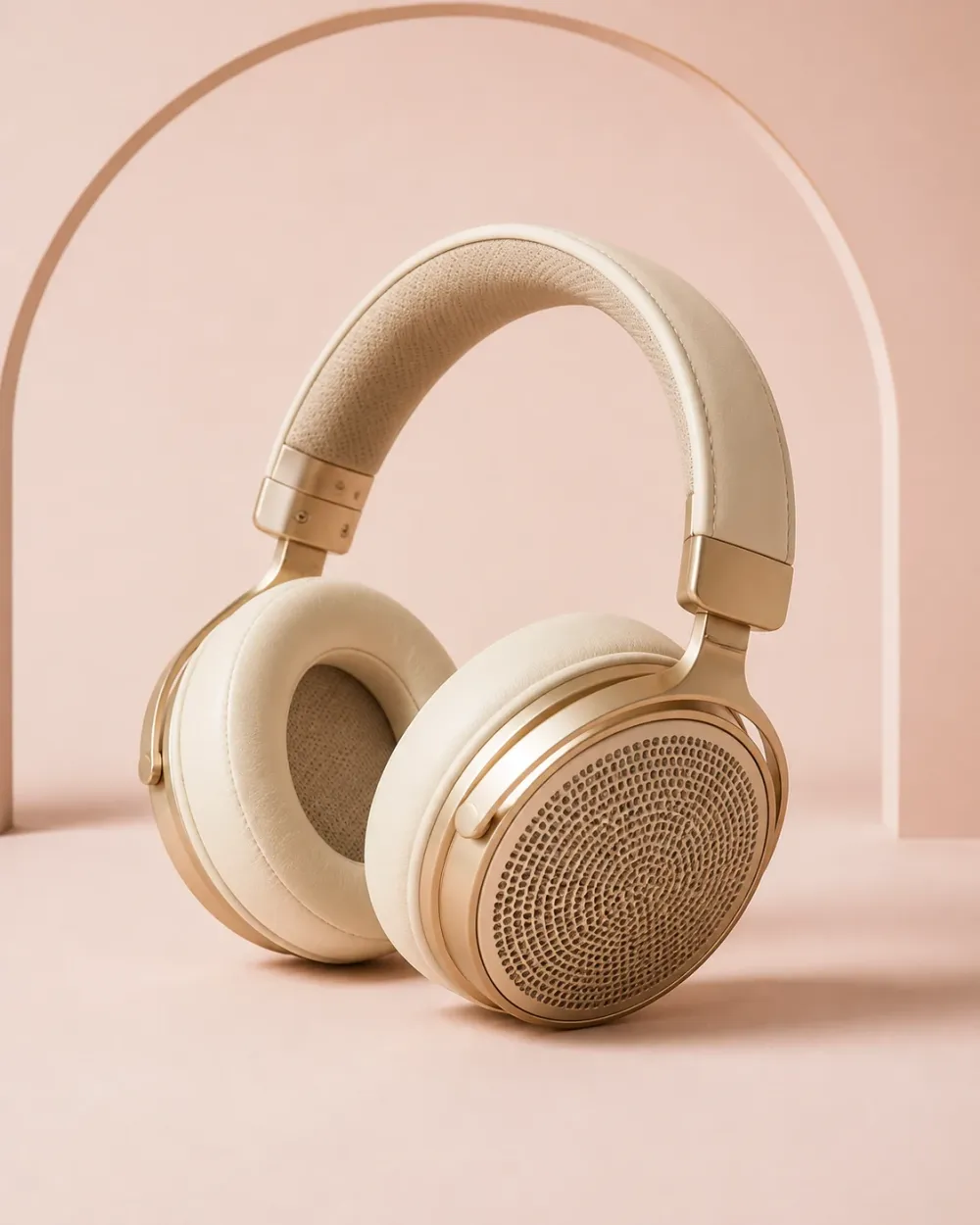


Northbeam Atlas II vs Halcyon Drift Pro: over-ear or in-ear?
One isolates 7 dB better and will not fit in a pocket. The other sounds livelier and opens itself in your bag. Measured on the same rig, in the same session.
The short answer
Northbeam Atlas II
If the only question is which one does the job better, it is the Atlas II, and it is not close: 7.3 dB more isolation at 100 Hz, five times the battery life, a flatter response, and pads you can replace. The Drift Pro wins on everything the measurements cannot express — it weighs 5.4 g, it goes in a pocket, and it does not announce to a room that you are wearing headphones. Buy the Atlas II unless size is a hard constraint, in which case buy the Drift Pro and a zipped pocket.
Check price at Northbeam Direct (opens in a new tab)These are not the same product in two sizes. One is a set of over-ears that isolate a commute; the other is a pair of buds that live in a pocket. The table below is the same fixed rig, the same session, and the same signal for both.
Side by side
| Criterion |  Northbeam AudioNorthbeam Atlas II Northbeam AudioNorthbeam Atlas II |  HalcyonHalcyon Drift Pro HalcyonHalcyon Drift Pro |
|---|---|---|
| Our score | 8.8 out of 10 — Strong buy | 7.6 out of 10 — Good, with caveats |
| Form factor | Over-ear, does not fold | In-ear, pocketable case — the better of the two |
| Isolation, 100 Hz | 31.4 dB — the better of the two | 24.1 dB |
| Isolation, 1 kHz | 26.8 dB — the better of the two | 22.0 dB |
| Response shift with ANC on | 0.6 dB — the better of the two | 1.1 dB |
| Battery, single charge | 38 h — the better of the two | 7 h 10 m |
| Battery, with case | Not applicable | 29 h |
| Weight, per side | 286 g total | 5.4 g — the better of the two |
| Tuning | Neutral, 2 dB sub-bass lift | Lifted bass, forward presence |
| Repairability | Replaceable pads, parts listed — the better of the two | Sealed with adhesive |
| Carrying | 24 cm case | 58 mm case that opens in a bag |
Which one, for whom
- If you commute by train
- Northbeam Atlas IIRail rumble sits around 100 Hz, and 7.3 dB is roughly the difference between hearing it under the music and not hearing it at all.
- If you walk or run
- Halcyon Drift ProNothing over-ear is comfortable at pace, and the Atlas II has no water resistance rating at all.
- If you edit audio or video
- Northbeam Atlas IIThe flatter response and the 0.6 dB shift with cancellation on make it usable for real monitoring. The Drift Pro is not.
- If you fly monthly
- Northbeam Atlas IIThirty-eight hours means one charge covers a return trip, and the isolation advantage is largest at exactly the frequencies a cabin produces.
- If it lives in a coat pocket
- Halcyon Drift ProThe Atlas II does not fold and its case is 24 cm across. This is a hard constraint, not a preference.
Same rig, same session
Both pairs were measured on the same head-and-torso simulator on the same afternoon, with three runs each and the seal reseated between them. That matters more than it sounds: isolation figures move by two or three decibels between sessions depending on ambient temperature and how the pads or tips are seated, so numbers taken weeks apart are not comparable.
The 7 dB
Seven decibels of additional isolation at 100 Hz is roughly the physics of the two formats. An over-ear pair seals against the side of your head with a large, compliant pad; an in-ear pair seals inside a canal with a small silicone tip. The first has more surface area and more mass to work with, and no amount of processing closes the gap.
What the Drift Pro does achieve is getting closer than most in-ears manage — 24.1 dB is 4.7 dB better than the average of the ten other in-ears we have run through this protocol. It is not a compromise product. It is a smaller product.
Where the Drift Pro is genuinely better
Weight and presence. Over eleven hours of listening in a fortnight, both testers reported taking the Atlas II off between tasks and leaving the Drift Pro in. That is not a measurement, and it is the reason one of us bought a pair.
The tuning is also more immediately enjoyable. Whether that is a virtue depends entirely on whether you want a recording reproduced or presented.
The battery gap is bigger than it looks
Thirty-eight hours against seven hours ten minutes is a five-fold difference, but the practical gap is larger, because the Drift Pro’s charge cycle involves a case that must itself be charged and that you must remember to close. Over five weeks we ran the Drift Pro flat twice and the Atlas II never.
Our answer
The Atlas II, unless the size is a constraint you cannot negotiate. Both are good; one of them is measurably better at the thing they are both for.