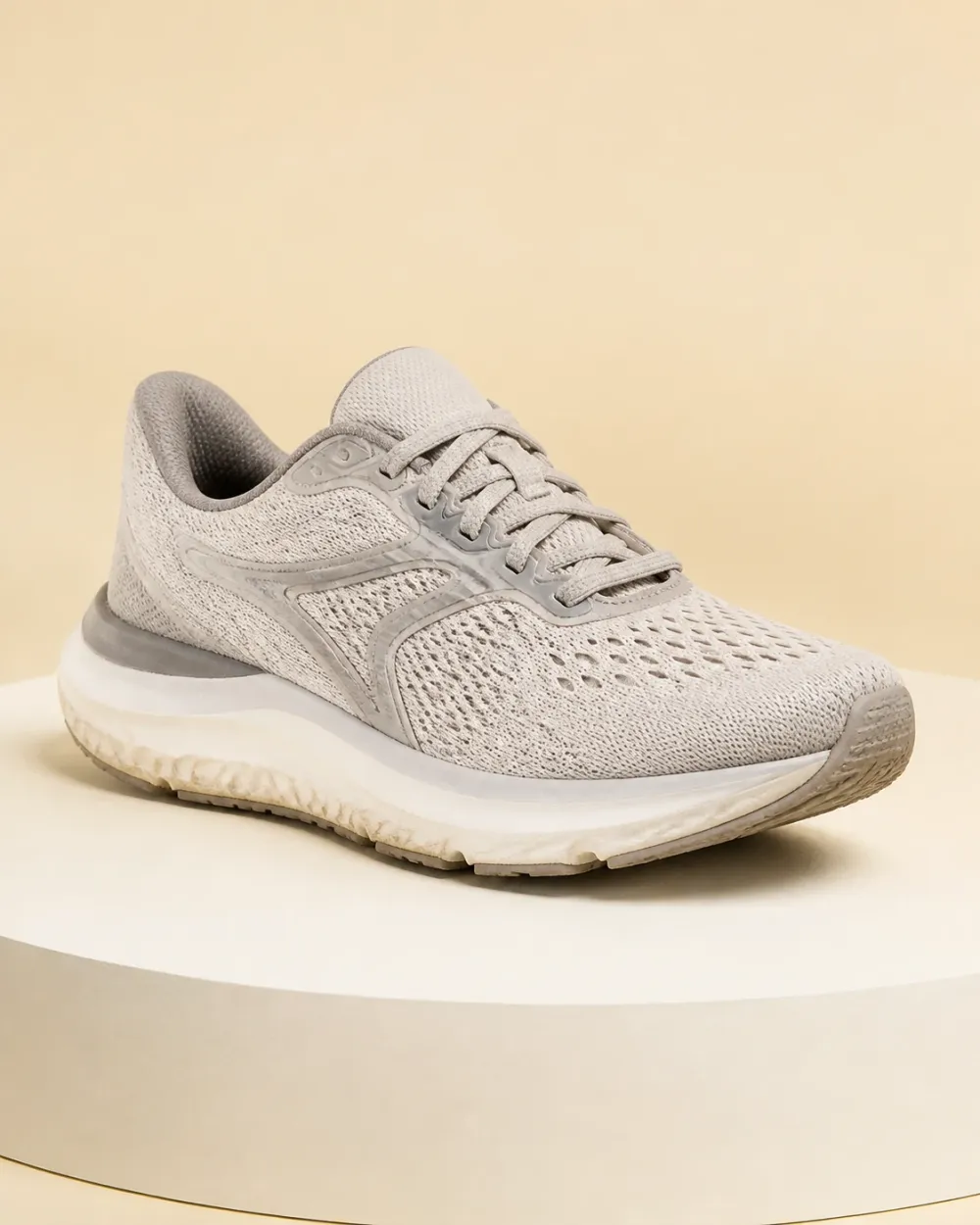


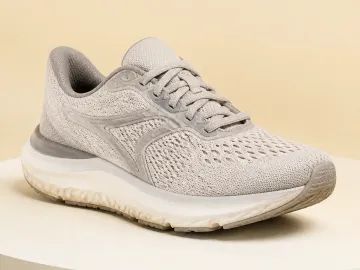

Ardent Stride 5 review: the daily trainer that survived 400 miles
Ardent's foam has always been good on day one. This is the first version that is still good on day two hundred.
The verdict
Best OverallStrong buy
Recommended without caveats for most people.
Four hundred miles in, the Stride 5 has kept 91% of its stack height and all of its personality. That is the number that matters for a daily trainer, and it is a category-leading one. The platform is wide enough to be genuinely stable, the foam is soft without feeling vague at pace, and the upper has finally stopped being the reason to buy something else. It runs half a size short, which is Ardent being Ardent.
- Buy it if
- You run four to six times a week on road and want one shoe to do all of it.
- Skip it if
- You race often enough to want a plate, or you have a wide forefoot and cannot try before buying.
Tested for 400 miles across two pairs and eleven weeks. Bought at retail with our own money. How we test
Pros and cons
Pros
- Best measured midsole durability of any trainer we have wear-tested
- Wide, stable platform without a medial post
- Handles easy miles and threshold work in one shoe
- Outsole showed no midsole exposure at 400 miles
Cons
- Runs about half a size short of the Stride 4
- Narrow through the midfoot for a shoe with this forefoot width
- Upper mesh holds water and takes a full day to dry
- Only two colourways at launch
Every running shoe is good for the first fifty miles. The interesting question is what a midsole does over the following three hundred and fifty, and it is the question most reviews cannot answer because most reviews are written after a week.
- 91%
- Stack retained at 400 mi
- 268g
- Weight, UK 9
- 92mm
- Forefoot platform width
Class average: 78%
What 400 miles does to it
We measure stack height at five points with a digital gauge before the first run and again at 100, 250, and 400 miles, on two pairs run by two people of different weights. Foam that packs out loses height, and losing height changes the geometry the shoe was designed around.
| Test | Result | Class average |
|---|---|---|
| Stack retained, heel | 91% | 78% |
| Stack retained, forefoot | 94% | 83% |
| Energy return, fresh | 68% | 64% |
| Energy return, 400 mi | 64% | 52% |
| Outsole wear | No exposure | Partial exposure |
Two pairs, 400 miles each, road and light trail. Reference is the mean of nine cushioned daily trainers between $130 and $170 tested with the same protocol.
Nine per cent of compression over 400 miles is the best figure we have recorded, and the practical version of that number is that the shoe at mile 380 still feels like the shoe at mile 80. Most trainers in this class go noticeably dead somewhere around 250, which is exactly the point at which people start saying a shoe “feels tired” without knowing why.
The ride
Soft at easy pace and surprisingly willing when pushed. There is no plate, no carbon, and no attempt at propulsion; what there is instead is a foam that compresses a long way and comes back without the wallowing that usually accompanies that much travel.
The 92 mm forefoot is the underrated feature. Wide platforms do the stability work that medial posts used to do, without the shoe fighting a neutral runner. Over eleven weeks neither tester reported the late-run instability that soft trainers usually produce when form falls apart.
Fit, and a warning
It runs short. Not slightly — consistently about half a size short of the Stride 4, confirmed across both testers and on a Brannock. Ardent revises lasts more often than it announces doing so, and if you are reordering by size from a previous pair, you will get a shoe that does not fit.
The midfoot is also narrower than the forefoot width suggests. Wide feet will find the front generous and the middle less so.
Against the Tempo Carbon
Different jobs. The Tempo Carbon is 79 g lighter and measurably faster below 5:30 per kilometre, and it is finished at around 200 miles. The Stride 5 costs $105 less and lasts twice as long. Most runners need one of these and think they need the other.
The verdict
The best daily trainer we have wear-tested, held back only by a sizing change nobody announced. Try them on, go up half a size, and expect to be running in them next spring.
How it scored
Weighted average of 6 criteria
- Durability9.422%
91% of stack height retained at 400 miles, against a 78% class average.
- Ride8.922%
Soft at easy pace, firm enough to push at threshold. Genuinely versatile.
- Stability9.117%
A 92 mm forefoot platform does most of the work here.
- Upper and fit8.017%
Comfortable and well-shaped, but half a size short of the Stride 4.
- Weight8.211%
268 g in a UK 9, competitive rather than remarkable.
- Value9.011%
$145 for a shoe that lasts 400 miles is good arithmetic.
Overall8.8/10
Specifications
Midsole
| Foam | Supercritical EVA blend |
|---|---|
| Stack, heel | 34 mm |
| Stack, forefoot | 26 mm |
| Drop | 8 mm |
Measured durability
| Stack retained at 400 miles | 91% |
|---|---|
| Energy return, fresh | 68% |
| Energy return, 400 miles | 64% |
Fit and weight
| Weight, UK 9 | 268 g |
|---|---|
| Forefoot width | 92 mm |
| Sizing note | Half a size short of the Stride 4 |
Where to buy the Stride 5
- Ardent StoreCheck price for the Stride 5 at Ardent Store (opens in a new tab)
- Pace OutfittersFree returns after 30 days of runningCheck price for the Stride 5 at Pace Outfitters (opens in a new tab)
We earn a commission when you buy through these links. It never changes what we recommend, and we buy every unit we test. How we stay independent.